
This guide will cover what is included in a real warehouse cleanout, why the waste piles up so quickly, and how to remove pallets, obsolete stock and industrial debris without closing shop for weeks.
Why Warehouses Accumulate So Much Waste?
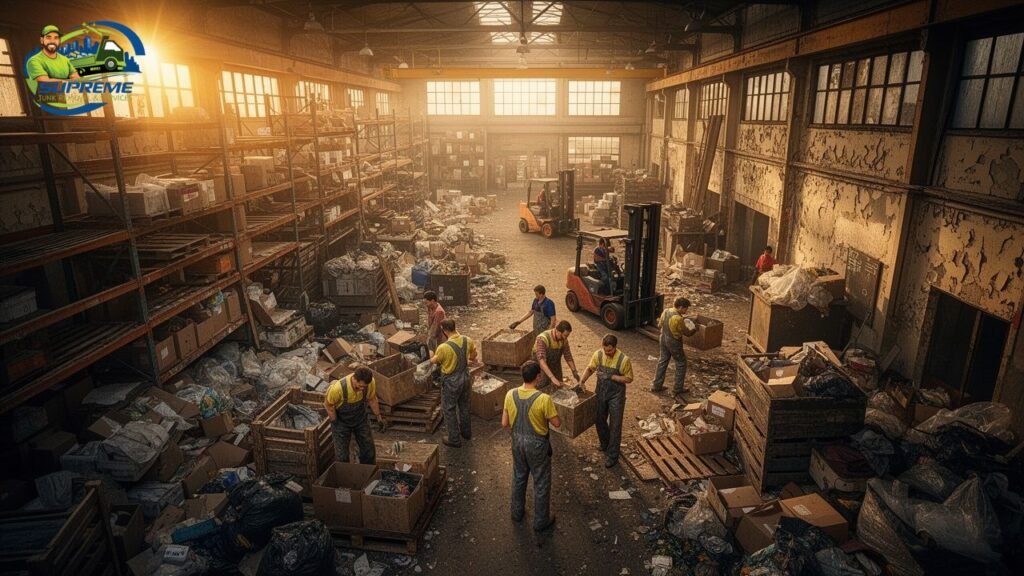
Warehouses are not just buildings. Stock changes, packages get ripped open and pallets break under repeated use; and seasonal stock is left out till someone finally decides it will never move. Now multiply by a facility that’s operating for five or 10 years and you have a backlog that a weekend’s work won’t cure.
The single wood pallet is a good illustration of the amount of material handled in a single warehouse. The industry estimates that approximately 919 million new wooden pallets were produced in the U.S. in 2021, plus hundreds of millions of pallets already in circulation that were repaired. The number of pallets in use across America at any given time is estimated at 3.1 billion, and even a medium sized distribution center (DC) can have hundreds of pallets in a yard, awaiting a scheduled cleanout at the time the cleanup project is planned. Fortunately, the wood pallet industry has one of the greatest rates of recovery of any packaging material. Only about 95 percent of wood pallets are sent to the landfill; pallet disposal doesn’t have to mean putting everything in the dumpster.
Obsolescence of products, inventory and equipment follows the same pattern. A company that never would have planned a proper warehouse cleanup finds itself with dead stock in the expensive prime racking space only to have people compute the space per square foot that is lost to dead stock.
What Counts as Warehouse Waste
Before starting an industrial warehouse cleanout, it helps to separate the material into categories, because each one has a different disposal path.
- Wood pallets and dunnage, whether broken, chemically treated, or simply excess
- Obsolete, expired, or damaged inventory that cannot be sold or donated
- Cardboard, shrink wrap, strapping, and other packaging waste
- Steel racking, shelving, and conveyor parts being decommissioned
- Electronic waste such as old scanners, terminals, and forklift batteries
- Chemical residue, oils, or containers that fall under hazardous waste rules
- General construction debris left behind from renovations or tenant changes
Combining these categories together is the single biggest mistake companies make during a warehouse waste removal project. Dangerous material handled like ordinary trash can trigger fines and recyclable pallets tossed into a mixed debris box lose their reselling or mulch value entirely.
Building a Warehouse Cleanout Checklist
An efficient warehouse cleanout checklist maintains a large expertise project from turning into chaos. Most successful cleanouts follow roughly this sequence which is as follows:
1. Walk the facility and map the waste: Note where pallets are stacked or where obsolete stock sits and where hazardous materials or recycling items are stored. A written inventory prevents surprises on removal day.
2. Separate sellable and donatable from disposable inventory: Not everything old is worthless. Liquidators and donation programs will often take usable stock that has simply aged out of a catalog which reduces the volume that needs to be hauled away.
3. Sort pallets by condition: Intact pallets can often be resold to a pallet recycler or repair company. Broken units go toward grinding, mulch, or biofuel rather than a landfill.
4. Flag hazardous and electronic waste separately: Batteries with solvents and old fluorescent fixtures need certified disposal not a standard dumpster.
5. Schedule the physical removal: This is where labor and equipment matter most. Moving pallets and racking by hand is slow and increases injury risk, which is one of the main reasons companies bring in a warehouse junk removal crew with the right equipment rather than pulling floor staff off their regular duties.
6. Confirm disposal documentation: For larger facilities, especially those handling any regulated material, keeping records of where waste went and how it was processed matters for compliance and insurance purposes.
7. Reset the space: Sweep, inspect racking for damage, and confirm the cleared square footage is ready for new inventory or a new tenant.
Pallet Disposal Done Right
Pallets represent a significant portion of the trash in the warehouse, so it’s helpful to have pallet disposal as a category all on its own instead of just general trash. The worth of a cracked pallet is nearly worthless in a corner, but very valuable once it gets to a recycler for turning into mulch, animal bedding or boiler fuel, or to a repair shop to extract the boards for a new unit.
Facility safety is also part of this conversation. The Occupational Safety and Health Administration’s guidance on material handling and storage notes that improperly stacked or damaged pallets are a recurring cause of tip overs, forklift incidents, and slip and trip injuries in warehouse environments. A cleanout is not just a cosmetic project. Clearing broken pallets and blocked aisles directly reduces the kind of hazard that shows up in incident reports.
The lack of organized pallet dumping can end up costing companies twice – both in terms of wasted storage space and in the labor required to work around trash that could have been taken out in the first place months ago.
Removing Obsolete or Excess Inventory
All warehouses eventually have inventory that will not be sold in the normal course of business. Racking for discontinued SKUs, Damaged Goods, Expired Materials, and returns that were never processed are lost opportunities for revenue.
Usually, the remove warehouse inventory begins with a simple audit. Run a report of items that have not moved in 12 months or more, physically verify what condition they are in and decide on a path for each batch. Some of the stock can be sold to liquidators who specialize in overstock. Some are donated for a tax deduction. What is left, often damaged or expired product, is disposed of by a waste hauler capable of handling bulk volume.
It’s easy to underestimate how expensive skipping this step will be. Warehousing costs are per square foot whether the space is filled with sellable product or dead stock, and a full cleanout often recovers enough usable racking that a company can postpone a facility expansion altogether.
Industrial Waste Disposal and Compliance
Industrial waste disposal is different from your typical junk removal. Warehouses storing regulated manufacturing components, chemicals or packaging materials must dispose of industrial waste. In most states, you still have to keep track of non-hazardous industrial waste, and if it is hazardous, like certain solvents, batteries or contaminated packaging, then there are a whole different set of handling and disposal rules.
An accountable cleanout identifies these streams right from the start. Throwing multiple gallons of used oil or a few old batteries into a regular trash load is one of the most disastrous ways to transform a simple cleanup into an acquiescence issue. Partnering with a transporter habitual with the distinction between general commercial debris and orderly industrial waste ensures a facility remains flexible with local and federal regulations while operating efficiently.
DIY Cleanout vs Hiring a Professional Crew
You can use your own labor and a rented dumpster for smaller cleanouts. But when a project involves multiple stacks of pallets like old racking or multiple tons of mixed inventory then it usually makes sense to call in a professional crew.
A faithful warehouse junk removal team brings the labor with trucks and disposal relationships needed to move material quickly and sort it correctly to get it off site without pulling warehouse staff away from their actual jobs for days at a time. It also reduces injury risk since lifting damaged pallets and heavy racking is exactly the kind of task that leads to strains and cuts when it is handled by staff who do not do it every day.
Supreme Junk Removal & Services handles exactly this kind of project from single pallet loads to full facility cleanouts covering obsolete inventory and mixed industrial debris. The team sorts material on site so recyclable pallets and metal go where they should rather than everything ending up in the same landfill bound container.
Planning the Timeline
Large cleanouts rarely happen in a single day and trying to rush one usually means corners get cut on sorting and documentation. A realistic timeline for a mid sized facility runs anywhere from a few days for a single zone to a couple of weeks for a full building by depending on how much inventory needs auditing before removal and how much of the material requires special handling.
Scheduling around operating hours matters too. Many facilities run the cleanout in phases, clearing one section of racking while the rest of the warehouse stays functional rather than shutting down entirely. This keeps shipping and receiving running while the backlog of pallets and packaging or dead stock gets hauled out zone by zone.
Frequently Asked Questions
1. What is included in a warehouse cleanout?
A warehouse cleanout typically includes removing excess inventory, broken pallets, packaging materials, scrap metal, old shelving, obsolete equipment, construction debris, and other unwanted items. Hazardous and electronic waste should be separated and disposed of according to local regulations.
2. How should broken pallets be disposed of?
Broken pallets should be sorted by condition before disposal. Reusable pallets can often be repaired or recycled, while damaged pallets may be processed into mulch, biofuel, or other recycled wood products instead of being sent to a landfill.
3. How do I prepare for a warehouse cleanout?
Start by creating a warehouse cleanout checklist that includes identifying waste areas, separating recyclable materials, auditing obsolete inventory, setting aside hazardous waste, scheduling removal, and documenting disposal for compliance purposes.
4. Should I handle a warehouse cleanout myself or hire professionals?
Small warehouse cleanouts may be manageable with in-house staff and a dumpster. However, large cleanouts involving heavy pallets, racking, industrial debris, or large volumes of inventory are typically safer and more efficient when handled by a professional warehouse junk removal team.
5. How long does a warehouse cleanout take?
The timeline depends on the warehouse size and the amount of material being removed. Smaller projects may take a single day, while larger facilities with excess inventory, pallets, and industrial waste may require several days or a few weeks to complete without disrupting daily operations.
Final Thoughts
A warehouse cleanout is not just about hauling junk to a dumpster. When executed correctly then it retrieves valuable floor space or minimizes safety risks associated with damaged pallets and obstructed pathways to prevent hazardous and recyclable materials from entering inappropriate waste streams. It eliminates stock that has been silently incurring storage costs for extended periods. Instead of viewing it as a five year emergency it is recommended that facilities to integrate it as a regular aspect of operations so they can operate more efficiently and more safely because of this.
If your expertise has pallets stacking up or inventory that needs to go then Supreme Junk Removal & Services can manage the sorting and hauling or even disposal from start to finish. Call (857) 245-8160 to schedule a warehouse cleanup that keeps your operation running while the space gets cleared.