

Summarize with
Massachusetts bans more than twenty categories of material from regular trash, including mattresses and textiles. Hire an estate cleanout crew that doesn’t know that, and you’re the one explaining why the truck got turned away at the transfer station.
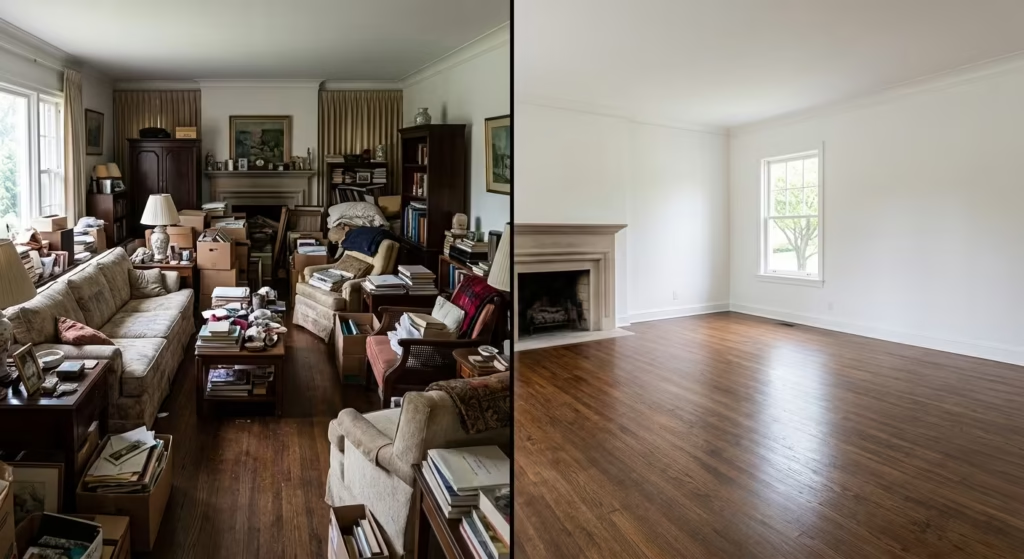
That’s the real risk behind any estate cleanout Massachusetts search: a parent has passed, or a house needs to be empty before a closing date that isn’t moving. This isn’t spring decluttering. There’s a legal process running in the background, family who disagree on what stays, and a house full of things nobody’s touched in decades.
Ask two things before you agree to anything: for a certificate of insurance, and whether the crew knows the state’s current waste bans. Hesitation on either is a no.
If you’ve been appointed personal representative of an estate, Massachusetts law gives you three months to inventory the decedent’s property, including its fair market value. Most families never hear this until it’s already a problem.
Here’s how it goes wrong. A crew shows up in week two and hauls out furniture, jewelry boxes, and file cabinets. Nobody photographed or valued any of it first. Months later, a sibling questions the estate’s accounting, and there’s no record left to answer with.
A cleanout company that’s done estate work will ask, unprompted, whether the inventory is done. If yours doesn’t ask, make them wait, or at least photograph every room before anything leaves. That one habit prevents more family disputes than anything else in this guide.
And the rush is usually unnecessary. The real deadline is the closing date, not the funeral. That three month clock is exactly why hurrying the estate cleanout process almost always backfires.
Most household cleanout services price the job one of three ways. The model matters more than the number, since it decides what you’re exposed to if the job runs long.
| Pricing model | How it works | Best for |
|---|---|---|
| Flat rate | One price for everything removed, sorted, and hauled | Full house, known scope |
| Per truckload | Priced by volume, one load at a time | Partial cleanouts, family still deciding |
| Hourly plus disposal fees | Labor by the hour, dump fees passed through | Single rooms, attic or basement jobs |
Ask directly whether donation runs and disposal fees for banned items like mattresses are included, or whether those show up as add ons after the truck’s already loaded. A quote that separates removal from disposal is usually the more honest one, even if the total looks higher upfront. If a company quotes one flat number that already covers the mattress and the old TV in the basement, they’ve priced in the disposal rules instead of surprising you later.
Cash only pricing with no written estimate is the first one. So is a company willing to quote a price over the phone for a house they’ve never seen, especially for full-service junk removal in Massachusetts. Watch for crews that offer to buy the entire contents of the house sight unseen before anyone in the family has gone through personal papers, photographs, or jewelry. That offer sounds like it saves everyone time. It also means nobody verified what was actually in those boxes before it left the property permanently.
A truck with no company name on it, a request for a large deposit before work starts, or reluctance to put anything in writing are the same warning signs that apply to any home service, and they still apply here.
Not every cleanout needs a paid crew, and saying so is what makes the rest of this guide worth trusting.
A good crew walks the house first, not backs a truck up to the door. They confirm what’s cleared, flag anything needing a second look (safes, filing cabinets, wired fixtures), and split donation from disposal before loading.
Estate furniture removal from a triple decker in Worcester, Lowell, or Somerville takes longer than a house with a driveway. Narrow stairwells mean carrying pieces down by hand. A crew that priced for that upfront won’t renegotiate mid job.
One to three days for a crew of three or four, for a typical single family home. Allow extra time if more than 1 floor without elevator and/or if family wants to check items first.
They’re sorted for disposal under state waste rules. Products such as mattresses, electronics and some appliances are added to a different stream of recycling, rather than the trash load.
Not the whole time. A walkthrough beforehand and a final check before the crew leaves is worth doing, especially if family disagrees on what should have stayed.
No. Since November 2022, all mattresses, box springs and textiles have been prohibited from being thrown in the trash statewide. They need donation or a mattress recycling program.
Most do, particularly in more populated areas where the dumpster is located on a public street. Please consult the local permitting office beforehand. Fines for an unpermitted dumpster often cost more than the permit.
They’re hazardous material and can’t go out with regular junk removal. Older Massachusetts houses may have outmoded oil heat or potentially have remnants of paint. These require a household hazardous waste day or a licensed hazardous waste drop off.
A hauling service is not typically an estate cleanout. It’s sifting through what once belonged to someone, discerning what is important to the family, and ensuring that nothing is discarded that should be saved, cherished, or given.
When you are stuck in a house with too many items to deal with and have no idea of where to begin, Supreme Junk Removal & Services can assist you. Call (857) 245-8160 or email supreme.junkservices@gmail.com to talk through the scope of the job before anything gets loaded onto a truck. A short conversation upfront is worth more than any quote given blind over the phone.